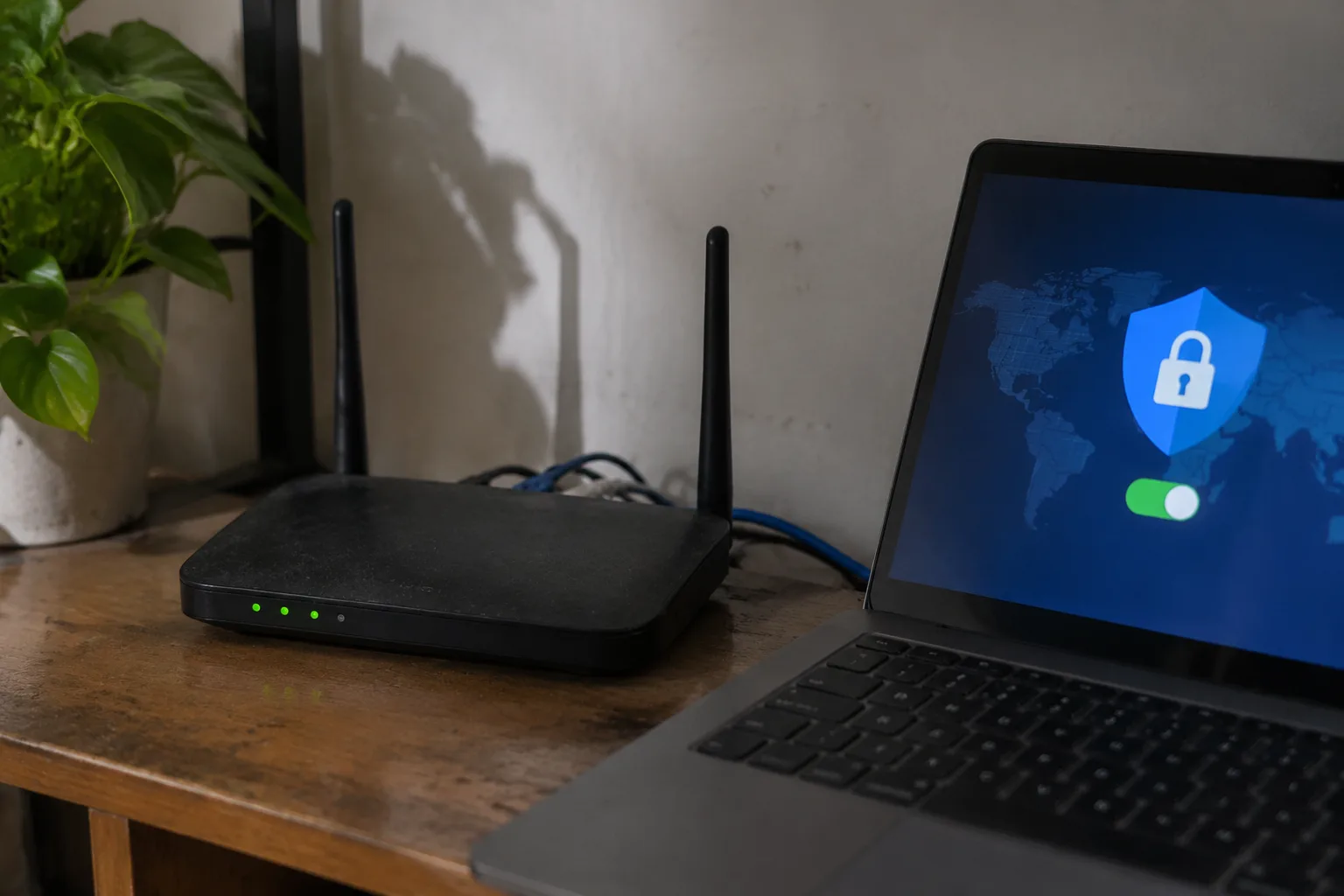
A home router with a VPN client baked in sounds like the tidy answer to a messy problem. One configuration screen, one password, and every device on the network, from the smart TV to the thermostat to the laptop left open on the kitchen counter, routes its traffic through an encrypted tunnel. No per-device apps. No forgetting to switch it on. That is the pitch, and it is a real capability. It is also a project that punishes optimism, because the router is the one box in the house that everything depends on, and a mistake there takes the whole household offline at once.
The gap between the pitch and the reality is mostly hardware. Stock firmware from the major consumer brands rarely supports VPN clients at all, and when it does, the support is thin: a handful of protocols, a clunky interface, and throughput that collapses under load. The realistic path runs through aftermarket firmware, which means replacing the router's operating system before adding anything else. That step alone filters out a large share of people who started this project expecting a settings toggle.
Why the Router Is the Right Place for a Tunnel
The case for doing this at the router rather than on each device is stronger than it first appears. A VPN app on a phone covers that phone. It does nothing for a game console, a streaming stick, or the cheap security camera that phones home to a server in another country. Devices like those often have no VPN client at all, and some cannot be configured beyond a Wi-Fi password.
Router-level routing catches all of them in one move. It also removes the failure mode where a person opens a laptop, forgets the VPN is off, and spends an evening on an open connection. When the tunnel lives at the router, the default state is protected. The tradeoff is that the protection becomes indiscriminate: everything goes through the tunnel, including traffic that would be better off taking the direct path.
The Firmware Question Comes First
Two aftermarket firmware families dominate the conversation: DD-WRT and OpenWrt. Both replace the manufacturer's software, both support OpenVPN and WireGuard clients, and both have been maintained for years by communities rather than companies. The choice between them matters less than whether the router in hand is supported at all.
Support is model-specific and unforgiving. A router with the right chipset and enough flash memory can run OpenWrt comfortably. A near-identical model with half the storage cannot, and the difference is often invisible on the retail box. The check has to happen before purchase, against the firmware project's own device database, not against a forum post from three years ago.
This is the first honest fork in the road. Most people who own a router bought it from an internet provider or a big-box store, and a large fraction of those units are locked down or underpowered. For them, the practical answer is a second router bought specifically for the job, kept separate from the main network, with the primary router left untouched.
A Separate Travel Router Solves the Messy Part
A small travel router running OpenWrt costs less than a mid-range pair of headphones and sidesteps the entire risk of bricking the household's main connection. It sits downstream of the primary router, broadcasts its own Wi-Fi network, and sends everything that joins it through the VPN tunnel. Devices that need the tunnel join that network. Devices that do not stay on the original one.
The arrangement has a cost in complexity and a benefit in reversibility. If the configuration goes wrong, the main network keeps working and the experiment can be reset without a family emergency. The split also solves a problem that full-network tunneling creates: streaming services and banking apps often refuse connections that arrive from a data center IP address, and a household that routes everything through the tunnel will discover this at the worst possible moment.
OpenVPN Versus WireGuard on Modest Hardware
WireGuard is the newer protocol and the better fit for router hardware. It uses far less processing power per megabit, which matters because router CPUs are small and slow compared with a phone's. A router that manages 300 megabits per second on a direct connection might push 150 through an OpenVPN tunnel and still struggle. With WireGuard, the same box can often come close to its direct-connection ceiling.
OpenVPN remains the more widely supported option across commercial VPN providers, and some providers still do not offer WireGuard configurations at all. That is the deciding factor more often than raw speed. A person should check the provider's documentation for WireGuard support before buying hardware, because a fast router running a protocol the provider does not offer is a dead end.
The throughput numbers quoted on router spec sheets also deserve suspicion. They describe routing performance on a direct connection, not encrypted tunnels. The realistic ceiling for a small travel router with WireGuard tends to land somewhere between 100 and 200 megabits per second, which is plenty for a household and nowhere near gigabit fiber speeds.
The Configuration Steps That Actually Matter
Once the hardware and firmware are settled, the setup itself is shorter than expected. The provider hands over a configuration file, either a WireGuard .conf file or an OpenVPN .ovpn file, and the firmware imports it. The steps below assume OpenWrt, which is the more common base for this work.
First, flash the firmware and connect to the router's admin page over a wired connection, never over Wi-Fi. A dropped wireless link during a firmware write is one of the few reliable ways to brick a router. Second, install the VPN package for the chosen protocol from the software menu. Third, import the configuration file and enter any credentials the provider requires.
Fourth, and this is the step people skip, set up a kill switch and a policy for what happens when the tunnel drops. Without one, the router silently falls back to the direct connection and traffic leaks in the clear. OpenWrt can enforce this with firewall rules that block forwarding from the LAN to the WAN interface except through the tunnel. The exact rules are fiddly, and copying them from a guide without understanding them is how households end up with no internet and no idea why.
Fifth, decide which devices route through the tunnel and which do not. This is done with policy routing, either by assigning devices to a separate network or by marking their traffic in the firewall. A streaming box and a work laptop usually want different treatment, and the router can give them that.
What Breaks, and How Often
The tunnel will drop. Providers rotate servers, maintenance windows happen, and the router itself will occasionally reboot after a power flicker. Each of those events is a small outage for every device on the tunneled network, and the recovery is not always automatic. Some routers reconnect within seconds. Others sit there with a dead tunnel until someone notices the internet is broken and restarts the service by hand.
DNS is the other common failure point. If the router's DNS settings still point at the internet provider's servers while traffic goes through the tunnel, requests can leak outside the encrypted path. The fix is to set DNS explicitly to the VPN provider's servers or to a resolver reached through the tunnel, and to verify it with a DNS leak test from a connected device.
Speed complaints are frequent and usually misdiagnosed. A household that pays for gigabit fiber and adds a small travel router will see a dramatic drop on speed tests, and the router is doing exactly what it was built to do. The hardware ceiling, not the provider, is the limit in most of these cases.
The Overnight Test Before Trusting It
A newly configured router should not be trusted until it has survived a night. Set it up in the evening, connect a single test device, and let it run until morning. Check the tunnel status, run a speed test, and confirm the public IP address matches the VPN provider rather than the home connection. Then pull the router's power cord, wait, plug it back in, and check again. A configuration that does not survive a reboot is not finished.
The final check is the one most guides leave out: unplug the tunnel on purpose. Disable the VPN service from the admin page while a device is connected and watch whether traffic continues in the clear or stops dead. If it continues, the kill switch is not working, and the setup is offering the appearance of privacy without the substance. That test takes two minutes and tells a person more about the configuration than any status indicator on the dashboard.


