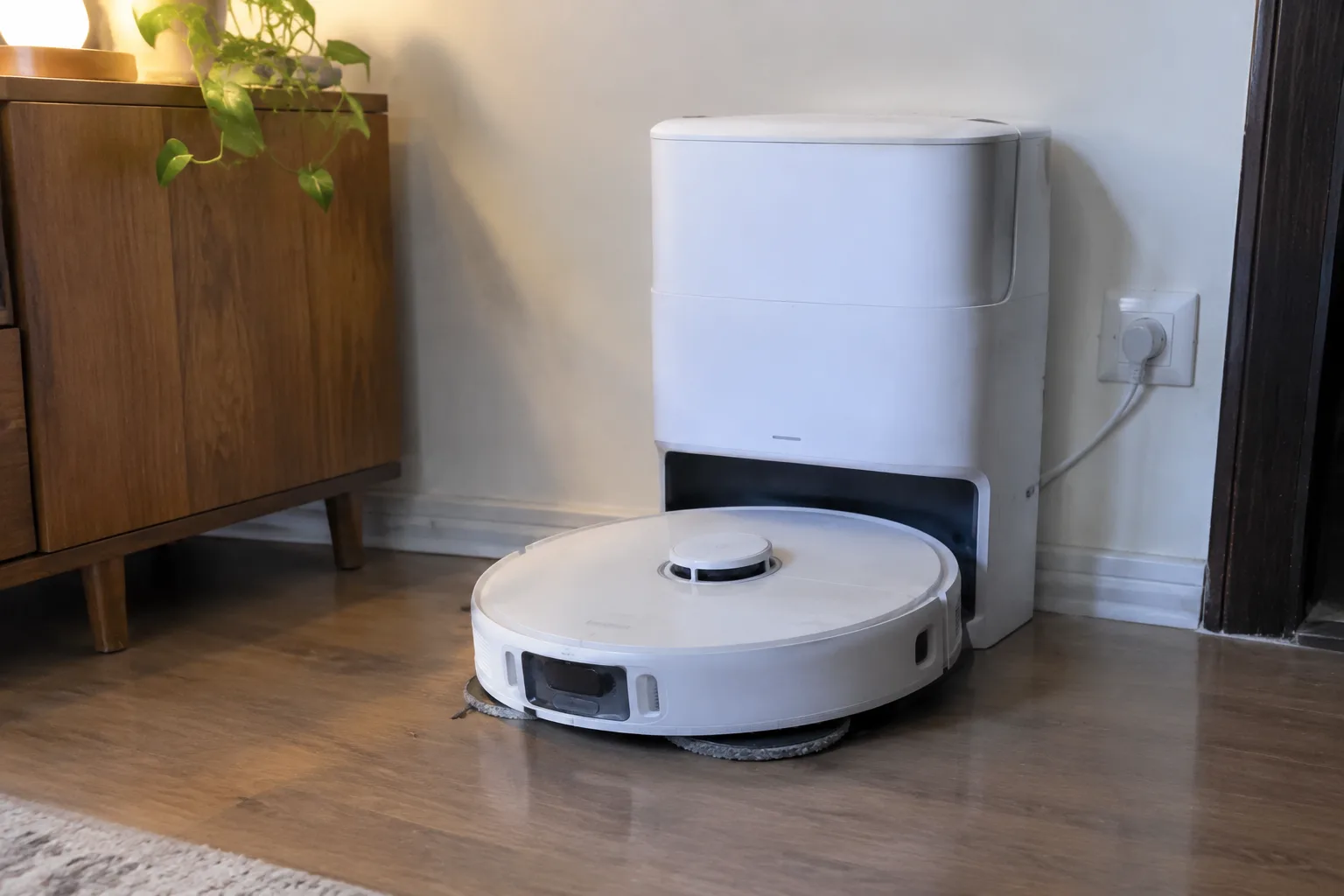
A robot mop with a self-cleaning dock costs somewhere between three and eight times what a plain robot mop costs, and the dock is the entire reason. The mop itself is often the same disc or roller that has been scrubbing kitchens for years. What changed is the base station: tanks that hold clean and dirty water, a tray that washes the pad, a heater that dries it, and a pump that pulls the sludge out of the mop head and stores it until someone empties the bucket. That is a lot of plumbing to bolt onto a floor cleaner, and it exists to solve one specific problem, which is that a wet, dirty mop pad left sitting in a closet starts to smell like a pond within a day.
The people who should buy one are not hard to name once the actual job of the dock is clear. It is not a labor-saving device in the way a dishwasher is. It is a hygiene device that happens to save some bending. Whether that trade is worth several hundred extra dollars depends on a handful of household facts that have nothing to do with how much someone likes gadgets.
The dock solves the smell problem, not the scrubbing problem
Worth being blunt about what the base station does and does not do. It does not scrub the floor better. The cleaning action still comes from the mop head pressing and rotating against tile or hardwood, and a cheaper model with the same head cleans the same floor. What the dock handles is the maintenance of the mop itself: rinsing the pad after a run, wringing out the dirty water, and blowing warm air through the fibers so bacteria do not get a foothold.
Anyone who has owned a first-generation robot mop knows the failure mode. The pad comes off a Saturday morning run gray and damp, gets tossed in a corner of the laundry room, and by Wednesday the whole room smells like a wet dog that rolled in a swamp. The pad gets washed eventually, or thrown out and replaced. The self-cleaning dock interrupts that cycle by doing the rinse and dry automatically, before the smell has a chance to establish itself.
So the buyer profile starts with someone who actually runs the mop often enough for the pad to be a recurring chore. Once a month, the dock is overkill. Three or four times a week, it starts to look like the difference between a mop that gets used and a mop that gets abandoned.
Households with hard floors in most rooms
The math only works where there is a lot of hard surface. A home that is 80 percent carpet has little for a mop to do, and a dock sitting idle in a corner is an expensive piece of furniture. A home with tile in the kitchen, bathrooms, and entryway, plus hardwood or laminate through the living areas, gives the mop a real route and gives the dock a reason to run its wash cycle several times a week.
Square footage matters less than layout continuity. An open-plan ground floor of 900 square feet with a single threshold is ideal, because the mop can cover it in one pass and return to the dock to be cleaned. A warren of small rooms with saddles at every doorway forces the mop to stop and start, and many models cannot climb a threshold taller than about 20 mm, so the dock ends up serving only the rooms on its own level.
People who will actually empty the dirty tank
Here is the unglamorous truth about self-cleaning docks: they clean the mop, not themselves. The dirty water tank has to be pulled out and dumped, usually after every two or three runs, and the tray underneath the mop head collects grit that needs a wipe every week or so. The dock automates the pad wash. It does not automate the human who has to carry a tank of gray water to the sink.
A person who already resents emptying a vacuum canister will resent this too, and the dock will gradually become a science experiment. Someone who does not mind a thirty-second maintenance ritual, and who finds the idea of a machine washing its own mop vaguely satisfying, is the right owner. This is a personality question more than a technical one, and it is the single most common reason these machines end up on a shelf in the garage.
The allergy and pet household, with a caveat
Homes with pets or allergy sufferers are often pitched as the ideal customer, and there is something to it. A mop pad that dries quickly and does not sit damp cuts down on the musty smell that comes from a wet microfiber left in a bucket. Frequent mopping of hard floors also lifts the fine dust and dander that settle there, and a robot that runs while the household is at work does that without anyone scheduling it.
The caveat is hair. Long human hair and pet fur wrap around the mop roller or cling to the pad, and the dock's wash cycle does not always flush it out. Owners of heavy-shedding dogs report pulling wads of wet hair off the roller every few days, which is a chore the dock does not remove. Short-haired pets are easier. A household with a golden retriever and three people with long hair should expect to do roller maintenance by hand regardless.
Open-plan homes where mopping is a real time cost
There is a category of home where manual mopping is genuinely a weekend event: a large open kitchen and living area with tile throughout, maybe a sunroom, maybe a finished basement. Mopping that by hand takes an hour, plus setup and cleanup, and the bucket gets emptied twice. A robot mop with a dock that holds enough clean water for a full run and washes the pad mid-route turns that hour into a background task.
For that household, the dock is not a luxury so much as a way to make the mop usable at all. The alternative, a manual mop and bucket, is cheaper but gets done less often, and a floor that is mopped monthly is not really clean in the way the household probably wants. The dock changes the frequency, and frequency is what actually determines how a floor feels underfoot.
Who should skip it: small apartments and single-room floors
A studio or one-bedroom apartment with 400 square feet of hard floor does not need a self-cleaning dock. The mop covers the whole place in ten minutes, and a pad that gets rinsed by hand in the sink is barely an inconvenience. The dock takes up floor space, needs a power outlet, and costs more than the apartment's entire cleaning budget for a year. A basic robot mop or even a good manual flat mop is the honest choice here.
The same goes for homes where the hard floor is confined to a kitchen and a bathroom. The dock would run once a week at most, and a dock that sits idle grows its own problems: stagnant water in the clean tank, a pad that mildews because the dry cycle ran days ago, a tray that collects dust. These machines are designed for regular use, and irregular use is worse than no dock at all.
The floor-type question that decides more than the dock does
Before the dock enters the conversation, the floor itself has a veto. Sealed hardwood, tile, laminate, vinyl plank, and polished concrete all tolerate a damp robot mop well. Unsealed hardwood, waxed wood, and some older parquet do not, and no amount of dock sophistication fixes a finish that water will lift. Bamboo flooring is similarly fussy about standing moisture.
A person with unsealed wood floors should not buy a robot mop at all, dock or no dock. A person with tile and sealed hardwood throughout is the natural customer. This check comes first because it is cheaper to answer than the dock question and it rules out a whole category of buyer before money gets spent.
What the extra money actually buys, in hours
Strip away the marketing and the dock buys back two things: the minutes spent rinsing and wringing a pad after each run, and the mental load of remembering to do it. The first is maybe five minutes per mopping session. The second is harder to price but real, because a mop that is always ready to run gets run, and a mop that needs its pad washed first gets skipped.
For a household that mops three times a week, that is fifteen minutes of saved labor plus a habit that actually sticks. For a household that mops twice a month, the dock is a solution to a problem that does not exist, and the money is better spent on a better mop head or a second pad. The dock's value scales with use, which is why the recommendation always comes back to frequency.
The installation details nobody mentions until the box arrives
A self-cleaning dock needs a spot against a wall with a power outlet, and it needs clearance on at least one side for the tanks to slide out. In a tight galley kitchen or a hallway that is already crowded, that footprint is a genuine constraint. The dock is roughly the size of a small microwave and considerably less attractive, and it does not fold away.
It also needs to be near the rooms it cleans. A dock tucked into a utility room at the back of the house means the mop has to travel through carpeted rooms to reach the tile, and many models will not cross a thick rug. The dock's location is a planning decision, and the household that cannot find a sensible spot for it is not really in the market, no matter how much the feature list appeals.
The buyer this machine was built for, in one portrait
Picture a house with tile and sealed hardwood through most of the ground floor, a dog that sheds, two adults who work during the day, and a kitchen that gets cooked in nightly. The floor is mopped often enough that the pad is a daily annoyance, and the household has the disposable income to trade several hundred dollars for a routine that runs itself. That household should buy the dock. It will use it, empty it, and notice within a month that the floor feels different underfoot.
Picture instead a one-bedroom rental with a kitchen the size of a closet, or a carpeted house with one tiled bathroom. The dock is the wrong tool, and the honest advice is to spend the money elsewhere. The feature is real and it works, but it works for a specific kind of home, and the fastest way to waste several hundred dollars is to buy it for a home that is not that kind.