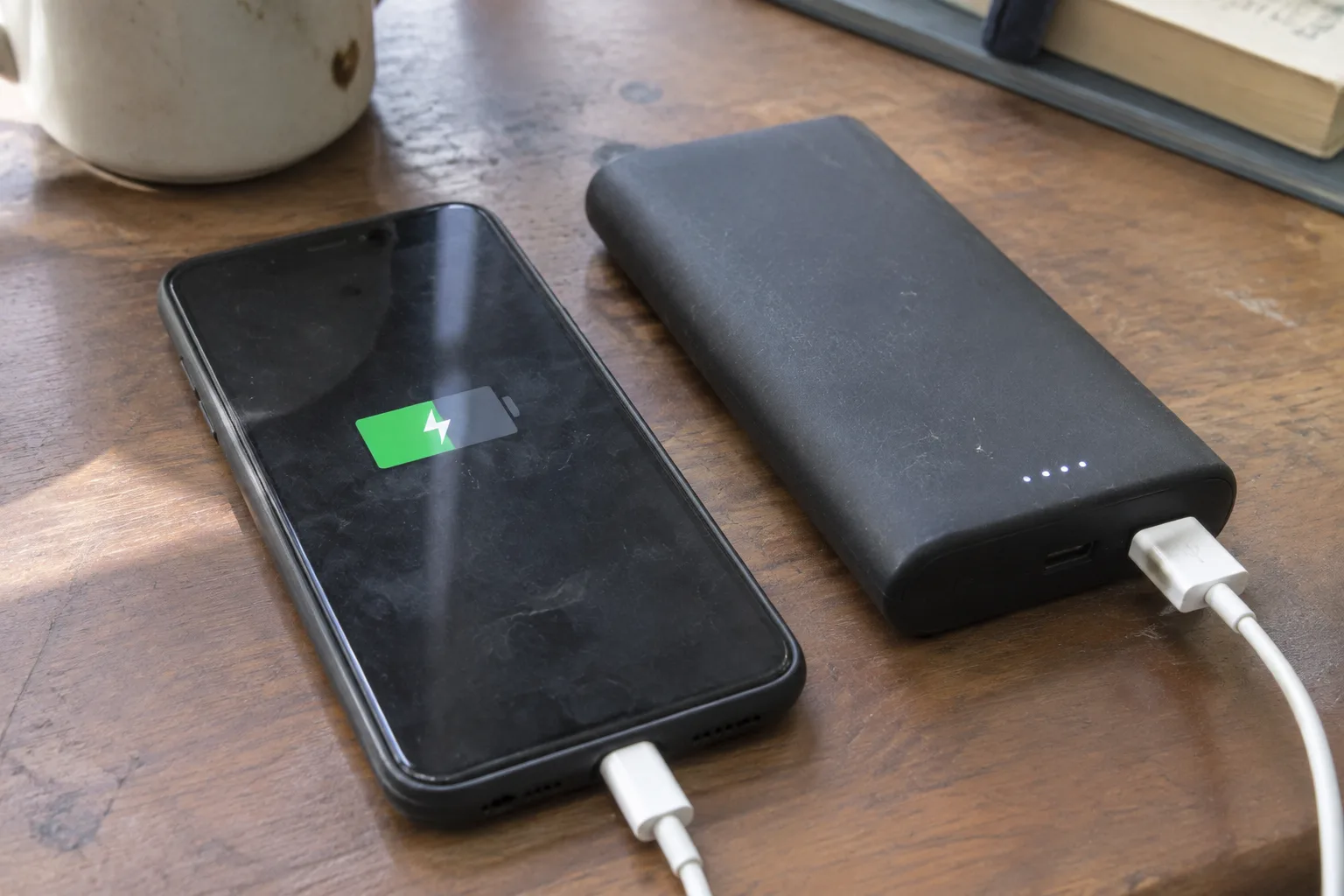
The packaging says 20,000 mAh in type so large it could be read from across a parking lot. The fine print on the back, in six-point gray, says something about 74 watt-hours and a rated capacity of 12,000. Both numbers sit on the same box. Both are technically true. Neither one tells a buyer whether the thing will charge a phone on a four-hour train ride or die halfway through a second top-up.
Portable chargers have become the rare electronics category where the marketing is almost entirely decoupled from the useful specification. Capacity is inflated by a convention that measures the cells rather than the output. Speed is advertised at a peak that most devices cannot accept. Safety is claimed with a badge that may mean very little. A buyer who reads the front of the box is being told a story; the specs that matter are buried in the manual, if they appear at all.
What follows is a checklist for cutting through that. Three questions, roughly in order of how much they change the buying decision: how much energy actually reaches the phone, how fast the handshake happens, and whether the battery is likely to swell in a drawer after two summers. Each has a number or a habit attached.
Why cell capacity and deliverable capacity are different numbers
The mAh printed on a power bank is the capacity of the internal lithium cells, measured at their native voltage, usually around 3.7 volts. USB output runs at 5 volts or higher. Converting between them involves a boost circuit, and that circuit loses energy as heat. The typical efficiency sits somewhere between 60 and 80 percent, depending on the quality of the converter and the current draw.
A 10,000 mAh bank delivering at 5 volts, at 70 percent efficiency, hands over roughly 26 to 27 watt-hours of usable energy. A modern phone battery runs around 15 to 18 watt-hours. That works out to about one and a half full charges, not the three or four a casual reader of the box might expect.
The useful figure is watt-hours, not milliamp-hours. Watt-hours account for voltage directly, so they can be compared across devices without conversion gymnastics. It appears on the back label because airlines care about it. Most carriers cap carry-on lithium batteries at 100 watt-hours, with some allowing up to 160 by approval. That back-label number, dull as it looks, is the one to memorize.
A practical rule: a 10,000 mAh bank is a day-trip charger, good for one phone and maybe a partial second charge. A 20,000 mAh bank is a weekend bag item. Anything above that starts to weigh like a small brick and invites scrutiny at security.
The rated capacity line is the honest one
Better manufacturers now print a second figure alongside the cell capacity: rated capacity, usually expressed in mAh at 5 volts. This is the deliverable number after conversion losses, tested under a defined load. A 10,000 mAh bank might list rated capacity at 6,000 to 6,500 mAh. That is not a defect. That is honesty.
When both figures appear, the rated capacity is the one to use for planning. When only the cell figure appears, assume a 35 to 40 percent haircut before doing any math. A bank that promises 30,000 mAh and never mentions rated capacity is either badly documented or hoping the buyer will not ask.
There is one more wrinkle: some banks list capacity at 3.7 volts and rated capacity at 5 volts, and the two numbers sit side by side in the same font. A buyer comparing two products on a shelf can easily mistake one for the other. The watt-hour figure, printed once, avoids the confusion entirely.
Charging speed is a negotiation, not a fixed rate
A charger rated at 65 watts does not push 65 watts into every device. It advertises the maximum it can supply if the connected device asks for that much and speaks the right protocol. The actual rate is settled in the first second or two of connection, when the charger and the device trade capabilities over the USB cable.
That handshake is where most of the buyer's confusion lives. USB Power Delivery, Qualcomm Quick Charge, and the various proprietary fast-charge schemes from phone makers are not fully interchangeable. A charger that supports PD at 30 watts will fast-charge a recent iPhone or a Pixel. It may drop to a slow trickle on a phone that expects a different protocol.
The practical move is to match the charger's protocol to the device, not to chase the biggest wattage number. An iPhone user gets little from a 100-watt brick that speaks only a proprietary Android protocol. A laptop user needs PD at 45 watts or higher to charge meaningfully while working. A pair of earbuds needs almost nothing.
Peak wattage also fades. A charger that hits 65 watts for the first ten minutes may settle to 30 watts once the internal cells warm up. The packaging rarely mentions the sustained rate. Reviews that measure the full charge curve are the only place to find it.
Cable gauge quietly caps the whole system
The cable between charger and phone is a resistor with a connector on each end. Thin conductors and long runs drop voltage, and the charger responds by limiting current. A 100-watt charger paired with a cheap three-foot cable may deliver 18 watts and never announce the shortfall.
USB-C cables rated for 60 watts are common and adequate for phones. Cables rated for 100 watts or 240 watts use thicker conductors and e-marker chips that tell the charger what they can carry. For laptop charging, the cable spec matters as much as the charger spec. A drawer full of mystery cables is a common reason a fast charger feels slow.
Length compounds the problem. A six-foot cable of modest gauge will underperform a three-foot cable of the same rating. Short and thick beats long and thin for power delivery, which is why the cable bundled with a good charger is often embarrassingly stubby.
Safety claims worth checking on the label
Lithium cells fail in two broad ways: thermal runaway, where a short or internal defect drives the cell into a self-heating cascade, and slow degradation, where the cell swells and loses capacity over hundreds of cycles. Both are rare in well-made products and considerably less rare in cheap ones.
Several markings indicate that a product has been tested against recognized standards. UL 2056 covers the power bank as a system. UL 1642 covers the individual lithium cells. IEC 62133 is the international equivalent for cell safety. CE and UKCA marks indicate a declaration of conformity, though enforcement varies. A bank carrying UL or IEC certification has at least been evaluated by a third party; one carrying only a CE sticker and a brand name has not necessarily been evaluated at all.
Pass-through charging, where the bank charges itself and a phone at the same time, is convenient and slightly harder on the cells. Some manufacturers explicitly warn against it. That warning is worth respecting on a bank that will live in a bag for years.
Temperature is the other quiet variable. A bank left on a car dashboard in summer can reach internal temperatures that accelerate degradation or, in bad cases, trigger a venting event. The cells do not need to be defective to fail; they need only to be hot and fully charged for long enough.
What swollen cells look like before they become a problem
A power bank that has begun to swell will often show it in the seams. The plastic case bulges along one edge. The bank no longer sits flat on a desk. The button feels different under a thumb. These are early warnings, and they are worth acting on immediately: stop charging the bank, do not leave it plugged in overnight, and dispose of it at a battery recycling point rather than in household trash.
Punctured or deformed cells are a genuine fire risk. A bank that has been dropped hard, sat in a hot car for a season, or shows any distortion in its shell has earned retirement. The replacement cost is trivial next to the alternative.
Matching the bank to the trip, not to the spec sheet
The best power bank is the one whose capacity matches the longest stretch the owner will spend away from an outlet, with a modest margin. Commuters who charge nightly need 5,000 to 10,000 mAh and will resent the weight of anything larger. Weekend travelers need 10,000 to 20,000 mAh. Campers and festival-goers might justify 20,000 to 27,000 mAh, which is the ceiling most airlines allow without special approval.
Speed matters more for some trips than others. A traveler who charges during a 30-minute layover needs PD at 30 watts or better. A traveler who leaves the bank connected overnight can live with a slower rate. The protocol matters more than the peak number: a charger that negotiates well at 30 watts beats one that peaks at 65 and falls back to 12.
Safety is the constraint that does not scale with price as neatly as capacity does. Two banks with identical specs can differ by a certification mark and a seam. The one with the mark and the clean seam is worth the extra ten dollars, every time, because the failure mode of the other one is a story nobody wants to tell.