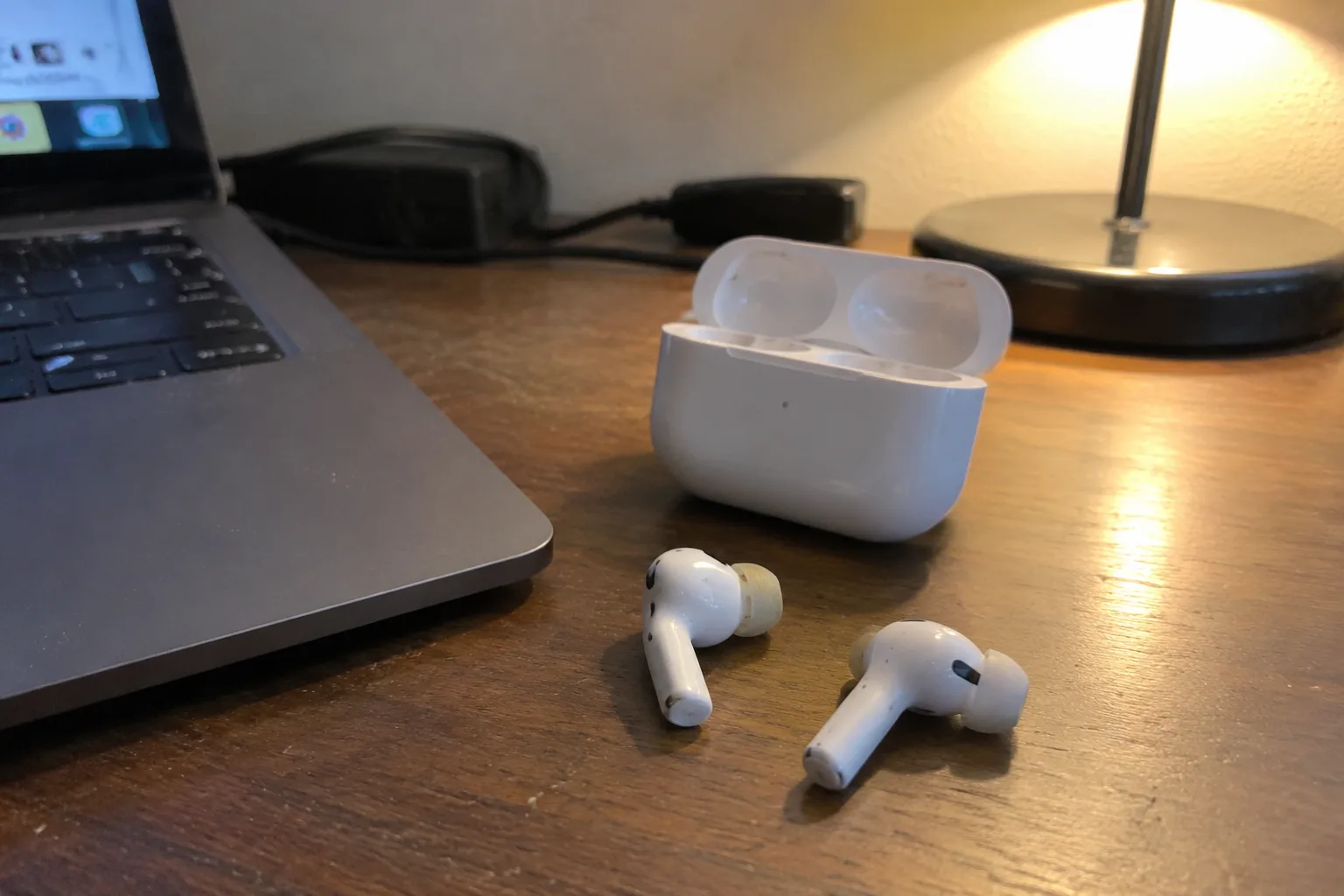
Two hundred and fifty dollars is the number that floats around the earbud aisle like a dare. It buys the flagship models, the ones with the vented housings and the tiny mesh screens glued in by hand, the ones reviewers photograph on marble slabs. Spend that, and the assumption is that nothing better exists. Spend forty dollars instead, and the assumption is that the buyer has accepted muddied cymbals and a connection that drops at crosswalks.
Both assumptions are wrong, and they are wrong in ways that cost real money. The honest answer to the spending question is that a narrow band of prices, roughly between sixty and one hundred twenty dollars, buys almost everything the average listener will ever notice. Below that band, sound quality and stability fall off a cliff. Above it, the extra money buys features that exist mostly to justify the extra money.
The physics explains the floor more clearly than any marketing does. A wireless earbud is a speaker, a radio, a battery, and a microphone crammed into roughly two grams of plastic. Sound quality at the low end is dictated by the driver and the acoustic chamber behind it, and building a chamber that does not rattle costs a certain amount of manufacturing care. At thirty dollars, that care is absent. At eighty, it is present. The difference is audible within three seconds of pressing play.
What the eighty dollar pair gets right that the thirty dollar pair does not
Put in a bass-heavy track on a cheap pair and the low end arrives as a single undifferentiated thump, with no separation between kick drum and bass line. The midrange, where voices live, smears into a haze. A hi-hat becomes a hiss. The tuning is usually boosted in the low and high extremes, because a smile-shaped frequency curve sounds exciting in a demo and tiresome by the second week. That is the signature of a budget driver straining.
An eighty dollar pair typically has a more neutral tuning and enough headroom to avoid distortion at volumes people actually use on a train. The improvement is not subtle, and it is not a matter of golden ears. Anyone who has heard both back to back on the same song can point to the difference.
The connection matters just as much, and it is the part buyers underestimate. Cheap earbuds use older Bluetooth chipsets that struggle to hold a stable link when the phone is in a back pocket and the body is between the two. The music stutters. One earbud drops out. The fix is usually a newer radio, and newer radios cost slightly more. It is the least glamorous component in the product and the one that determines whether the thing feels broken or normal.
The battery curve is not linear, and the numbers lie
Advertised battery life is measured at moderate volume with noise cancelling off, conditions nobody actually uses. A pair claiming eight hours delivers five or six on a commute at real volume. What matters more is the case. A case that holds three extra charges covers a week of normal use without a wall outlet, and that is the real specification. Cheap pairs skimp on the case battery before they skimp on anything else, because the case is the first thing a buyer holds and the last thing a buyer thinks to test.
Degradation is the quiet cost. Lithium cells in a tiny earbud lose capacity with every cycle, and a cheap cell loses it faster. A thirty dollar pair that claims two years of life often delivers one, and the earbuds are sealed units, so the battery cannot be replaced. The eighty dollar pair is not immortal either, but it usually survives past the point where the owner has stopped caring.
Where the money above one hundred twenty dollars actually goes
Above the sensible band, the budget shifts away from sound. Active noise cancelling is the first big line item. Good ANC requires microphones, processing, and tuning, and it genuinely works on planes and trains. The catch is that ANC quality varies enormously, and the premium charged for it is steep relative to the benefit. A person who commutes by car and works in a quiet room is paying for a feature that will never switch on in a meaningful way.
Spatial audio and head tracking follow. These features are impressive in a demo and rarely used after the novelty fades, because most listening happens to stereo music that was never mixed for the effect. Premium pairs also add multipoint pairing, wireless charging cases, and find-my-earbud tracking. Multipoint is genuinely useful for anyone juggling a laptop and a phone. The rest are conveniences that a cheaper pair often includes anyway.
The premium also buys materials: metal accents, softer silicone tips, a case with a hinge that feels engineered. None of it changes the sound. Some of it changes the fit, and fit is the one variable that can make a cheap pair outperform an expensive one.
Fit is the spec sheet's blind spot
An earbud that does not seal properly loses bass entirely, because low frequencies escape through the gap. A poor seal also forces the listener to raise the volume, which drains the battery and, over years of daily use, is the kind of habit that hearing specialists gently warn against. The most expensive pair in the store sounds thin and tinny if the tip does not match the ear canal.
This is why the return window matters more than the price tag. Ears differ enough that a model celebrated online can be unusable for a particular person. Buying from a seller with a generous return policy is worth more than fifty dollars of discount, because the only reliable test is an hour of real use in the environments where the earbuds will live.
Tip selection deserves ten minutes of patience. Most pairs ship with three sizes, and most people default to the middle one without trying the others. A slightly larger tip often transforms the sound more than an upgrade to a pricier model would.
The case for spending less than the middle
There is a real category of buyer for whom sixty dollars is the right answer: the person who uses earbuds for podcasts, calls, and the occasional album on a walk. Speech is forgiving. A cheap pair reproduces a voice clearly, and the failures that ruin music, the smeared mids and the thumping bass, barely register on a talk show. Paying more for a podcast habit is paying for capability that goes unused.
There is also a case for buying cheap deliberately as a first pair, to learn what actually matters before committing. The person who discovers after three months that the tips never fit, or that the case is too bulky for a pocket, learns more from a sixty dollar mistake than from reading a hundred reviews.
When the flagship price is genuinely justified
Two conditions push the number up. The first is frequent air travel or loud open-plan offices, where competent noise cancelling earns its premium across hundreds of hours. The second is a phone ecosystem that handles pairing and switching seamlessly, which some buyers value enough to stay inside it. Even then, the sensible ceiling sits closer to one hundred fifty dollars than to three hundred, because the marginal gain above that point is measured in materials and features rather than sound.
The flagship also carries a hidden depreciation. New models arrive yearly, and last year's flagship drops in price while keeping most of its capability. Buying one generation behind is the single most reliable way to get premium features at mid-range money.
A practical number, and the test that confirms it
Set the budget at eighty to one hundred twenty dollars for most people, with a hard floor of sixty and a soft ceiling of one hundred fifty for travelers. Then run the test that no spec sheet captures: play a familiar song at a comfortable volume, walk outside, and listen for the moment the music stops feeling like a recording and starts feeling like sound in the room. A pair that holds that feeling on a windy sidewalk, with the phone in a back pocket, is priced correctly regardless of the number on the box.
The number that matters is not the one printed on the tag. It is the number of months the pair stays in a pocket instead of a drawer, and the cheapest way to fail that test is to overpay for features that never switch on, or underpay for a seal that never fits. The pair that survives daily life for two years at ninety dollars has beaten the flagship that sits unused at two hundred and fifty.