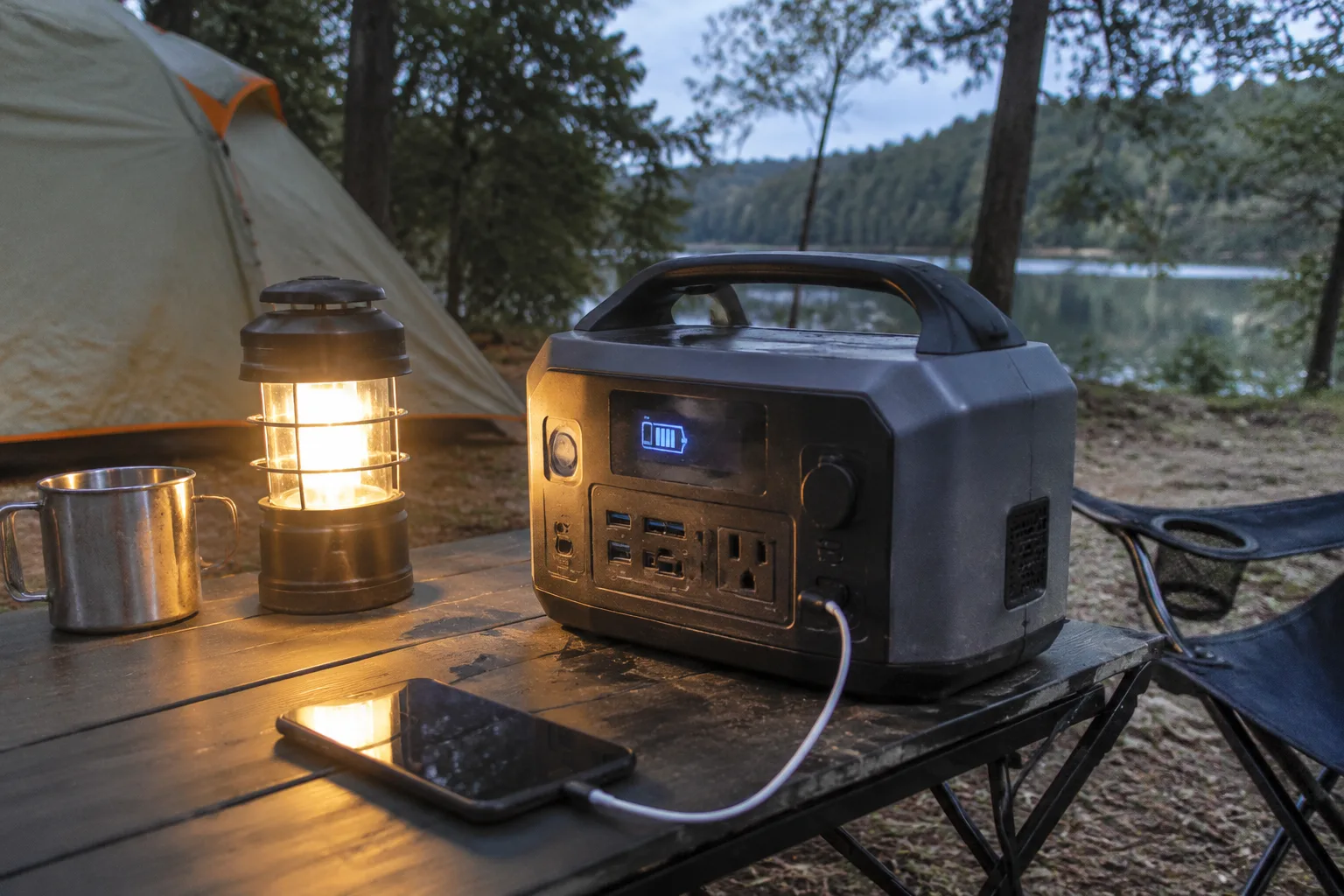
Lithium iron phosphate cells changed the math of portable power. A decade ago, a camping battery that could run a coffee maker and a string of lights through a weekend weighed as much as a small child and cost about the same as a used car. Today the same job sits in a 25-pound box with a handle, and the price has fallen into the range of a decent cooler. That shift is the reason this category suddenly matters to people who are not van-lifers or off-grid survivalists.
The honest complication is that the market has filled with near-identical black and gray boxes, most of them assembled from the same handful of cell suppliers, and the spec sheets are written to make every unit look like the best one. Numbers get quoted at the cell level, not at the wall. A station advertised as 1,000 watts will happily run a 1,000-watt load for a few minutes before its inverter starts to sweat and the fans spin up like a small aircraft.
What follows is organized around the two jobs in the title, which are genuinely different: camping wants quiet, light, and long slow draw, while tailgating wants a burst of heavy power for a few hours and does not care much about weight.
The watt-hour number that actually predicts a weekend
Capacity is quoted in watt-hours, and the figure on the box is measured from a full discharge down to zero. Real devices stop before zero because the battery management system protects the cells, and inverters lose a chunk to heat. A practical rule of thumb: assume roughly 85 percent of the rated capacity reaches a device plugged into the AC outlet. A 500-watt-hour station delivers something closer to 425 usable watt-hours.
That gap matters more than it sounds. A two-burner camp stove is a fuel appliance, but a portable induction cooktop pulls 1,200 to 1,800 watts and will drain a mid-size station in under half an hour. This is why the camping crowd tends to buy for lights, phones, a fan, a laptop, and a small cooler, and why the tailgating crowd tends to buy for a TV, a blender, and a griddle. Those two shopping lists live in different parts of the market.
For a two-night car camp with three people, 500 to 700 watt-hours covers the modest load comfortably. A tailgate that runs a television, a speaker, and a portable griddle for five or six hours wants 1,000 to 1,500 watt-hours. Anything beyond that starts to weigh enough that two people should plan to lift it together.
Why a 300-watt panel rarely keeps up
Solar recharging is where expectations and physics diverge hardest. A folding panel rated at 200 watts produces that figure only under direct, cool, high-noon sun at the right angle. In real camping conditions, panels laid flat on a picnic table in partial shade often deliver a third to half of the rated number. A 200-watt panel might realistically push 70 to 100 watts into the battery for a few midday hours.
That means solar is a top-up strategy for a weekend, not a full recharge plan. A station that arrives empty will not fill from a folding panel over a two-night trip. The realistic approach is to charge at home before leaving, use solar to stretch the tail of the trip, and keep a 12-volt car charger cable as a backup for the drive home.
Panels also add bulk and a small ritual of repositioning, which is fine for a base camp and miserable for a tailgate where the vehicle is parked in a stadium lot and nobody wants to babysit a solar array. For tailgating, the recharge happens at home the night before, and the station is treated as a finite resource.
Pure sine wave inverters and the devices that care
Every station worth buying puts out a pure sine wave, which is the smooth AC curve that motors, compressors, and sensitive electronics expect. Modified sine wave units exist in the cheap tier and they cause a characteristic hum in fans, they can make a laptop power brick run hot, and they occasionally confuse a device's internal supply into shutting down. The price gap between the two is small enough now that there is little reason to accept the rougher output.
The device most likely to notice is a compressor cooler, which cycles its motor on and off and draws a surge each time it starts. A station's surge rating, usually double its continuous rating for a few seconds, is what allows that start. A 500-watt continuous station with a 1,000-watt surge handles a small fridge fine. A resistive load like an electric kettle has no surge and only tests the continuous number.
For tailgating, the griddle is the load that separates the serious units from the pretenders. A typical electric griddle pulls around 1,500 watts. Running one for an hour at a tailgate takes a station rated for at least 1,500 watts continuous, and it will eat through a 1,000-watt-hour battery in roughly an hour and fifteen minutes before inverter losses. This is the single most common mismatch in the category: people buy a mid-size station and then discover the griddle is beyond its reach.
Weight, handles, and the walk from the car
Power density has improved, but it has not become magic. A 1,500-watt-hour station in the current generation lands around 40 to 50 pounds. That is a two-hand lift and a short carry. A 500-watt-hour unit sits around 12 to 18 pounds, which one person can carry from the trunk to a campsite in a single trip along with a bag of gear.
The handle design is not a trivial detail. Some units put the handle on top of a rectangular body and balance well. Others mount the handle on one face so the weight hangs off the wrist at an angle. For a tailgate, where the carry distance is short, this hardly matters. For camping, where the station might move from the car to a picnic table to a tent vestibule, the carry geometry and the footprint both earn their keep. A tall narrow unit tips on uneven ground; a low wide one stays put.
Water and dust resistance is worth a mention. Most of these units carry an IP rating only on their outlets or not at all, and a station sitting on damp grass or a tailgate table in the rain is asking for trouble. A simple dry bag or a plastic bin with the lid cracked open covers the gap for a weekend.
Output ports and the small conveniences that earn a spot
The port layout is where the good units distinguish themselves from the merely adequate. A USB-C port that delivers 100 watts charges a laptop at full speed, which is the single most useful feature for a camper working remotely or a tailgater keeping a tablet alive. A 12-volt car socket is worth having for a tire inflator or a small cooler. A built-in light is a small thing that gets used constantly after dark.
A wireless charging pad on top sounds like a gimmick and mostly is. It drains slowly and heats the phone. The ports that matter are the high-wattage USB-C and the standard AC outlets, and the number of AC outlets is worth checking: two is the practical minimum for a tailgate, since a griddle and a speaker might want to share.
App control and Bluetooth are features that read well on a box and get used twice. The one real use is monitoring charge from inside a tent, which is a convenience, not a need. Weight that feature against the price bump.
A short list organized by the two jobs
For camping with light loads and an emphasis on portability, the Jackery Explorer 500 and the EcoFlow River 2 Pro both sit in the 500 to 800 watt-hour range at under 20 pounds, with pure sine output and a 100-watt USB-C port. The River 2 Pro recharges from a wall outlet unusually fast, which is a real benefit for a Friday night departure.
For a tailgate that runs a griddle and a television, the Bluetti AC200MAX and the EcoFlow Delta 2 Max both clear 2,000 watts continuous and around 2,000 watt-hours, which covers a heavy afternoon with margin. They weigh 60 pounds and up, which is the price of that margin, and both accept a solar input for a longer trip.
The middle ground, a station around 1,000 to 1,500 watt-hours with 1,500 to 1,800 watts continuous, is where most buyers land. The Anker Solix C1000 and the Jackery Explorer 1000 v2 fit there, both under 30 pounds and both capable of running a small griddle or a coffee maker without complaint. For a household that wants one unit for both camping and tailgating, this band is the practical choice, and the trade is a griddle that runs a bit slower or a cooler that draws a bit more.
The number to write on the box before the first trip
Buyers tend to overestimate what a weekend needs and underestimate what a tailgate draws. The fix is a five-minute exercise before purchase: list every device, find its wattage on the label, multiply by the hours it will run, and add the totals. A phone is 10 watts, a string of LED lights is 5, a fan is 30, a laptop is 60, a television is 100, a griddle is 1,500. The sum, divided by 0.85 to account for inverter losses, is the watt-hour figure to shop for.
That number, written on a scrap of paper and taped inside the lid, is more useful than any review. It turns a shelf of identical black boxes into a short list of two or three that actually fit the trip. The stations themselves have become good enough that the decision now rests on matching capacity to a real load, and the arithmetic is the only part of the purchase that rewards a little time.